
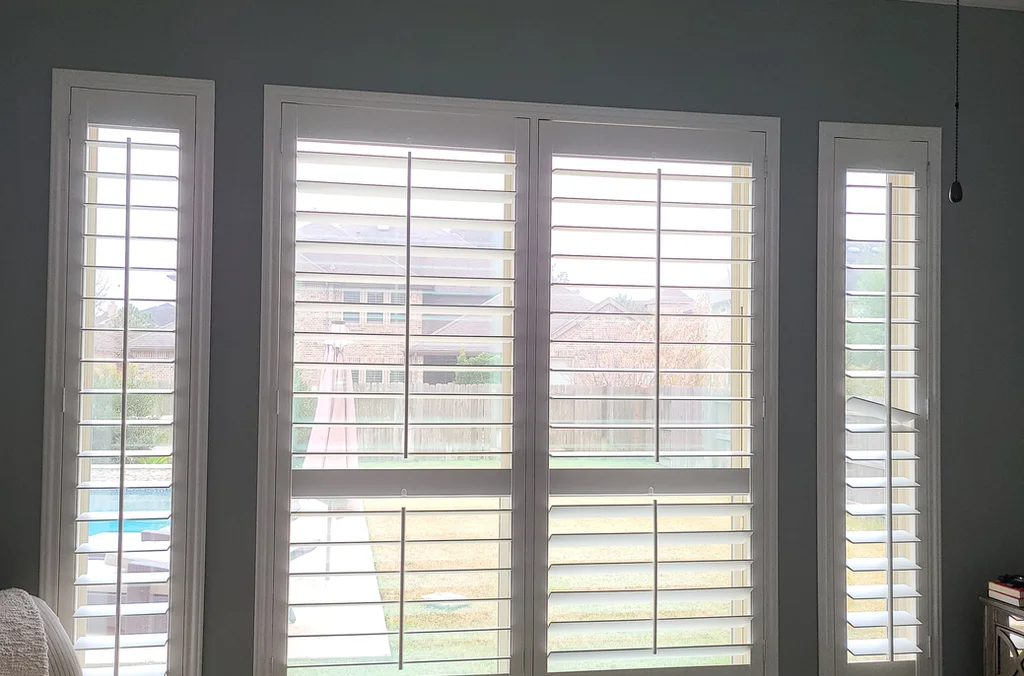
How to clean plantation shutters
Five minutes, one cloth
Shutters are among the easiest window coverings to keep clean. Dust them in place every week or two, and treat wood and poly a little differently.
Four steps
How to clean plantation shutters
A whole room of shutters takes about five minutes.
What you need
- Two soft microfiber cloths: one dry, one barely damp
- A soft duster or a vacuum with a soft brush attachment (optional)
- Mild dish soap, for poly shutters only
Close the louvers
Tilt the louvers fully closed so they make one flat surface. It's faster than cleaning them one at a time.
Dust from top to bottom
Wipe with a dry microfiber cloth or a soft duster, or use a vacuum with a soft brush attachment on low power. Work from the top down so dust doesn't fall on clean louvers.
Flip and repeat
Tilt the louvers closed the other way and dust the second side. Run the cloth along the frame, the rails and the sill.
Spot-clean marks
For fingerprints or kitchen splatter, use a soft cloth that is barely damp, then dry the spot right away with a second cloth.
Cleaning basswood vs. poly shutters
Basswood shutters
Basswood is real wood with a painted or stained finish. Keep water to a minimum: a barely damp cloth for marks, dried straight away. Never soak or spray them. On stained shutters, wipe along the grain so the finish keeps an even sheen.
Basswood vs. poly shuttersPoly shutters
Poly doesn't absorb moisture, so a damp cloth with a drop of mild dish soap is fine, followed by a wipe with clean water and a dry cloth. That is why we recommend poly for bathrooms, kitchens and laundry rooms.
Basswood vs. poly shutters
What to avoid on any shutter
- Abrasive pads, scouring powders and magic-eraser sponges, which dull the finish
- Bleach, ammonia, solvent or oil-based cleaners
- Soaking, spraying or steam-cleaning wood shutters
- Forcing a louver that feels stuck
A simple routine
How often to clean plantation shutters
Every week or two
Dust
Close the louvers and wipe both sides with a dry cloth. Two or three minutes a room.
Once a month
Frame, rails and sill
Run the cloth along the frame, the top of each rail and the window sill, where dust settles first.
A few times a year
Behind the shutter
Swing the panels open to clean the glass and wipe the back of the louvers and the inside of the frame.
As it happens
Marks and splatter
Kitchens and bathrooms especially: lift marks while they are fresh so nothing builds up on the finish.
Everyday care
Keeping shutters working for years
Not sure what a part is called? See the parts of a shutter.
- Move louvers by the tilt rod
- Use the tilt rod, or one louver in the middle on a Clearview shutter. Pushing on a louver near its end strains the pins.
- Open panels by the stile
- Swing a panel open by its side (the stile), not by the louvers or the tilt rod.
- Mind the sprinklers and the shower
- Keep wood shutters dry. Where water is part of daily life, poly is the better material.
- Fix small problems early
- A louver that droops, rattles or won't stay put usually needs a pin, a staple or a tension adjustment. These are small repairs, and they're easier before the louver breaks.
Shutter cleaning questions
Cleaning won't fix a broken louver or a loose pin. Book a free repair estimate or call (281) 866-4660.
How often should I clean plantation shutters?
A quick dusting every week or two keeps them looking new. In kitchens, wipe marks as they happen so grease doesn't build up.
Can I use water on plantation shutters?
On poly shutters, yes: a damp cloth and mild soap are fine. On basswood shutters, use a barely damp cloth only on marks and dry the spot right away.
Do plantation shutters collect a lot of dust?
Less than fabric. Louvers are smooth, hard surfaces, so dust sits on top and wipes off in one pass instead of working into the material the way it does with curtains.
Do I need to take shutters down to clean them?
No. Shutters are cleaned in place. Swing the panels open to reach the glass and the back of the louvers.
A louver won't stay in position. Can I fix it?
That is usually a tension adjustment or a worn pin. We handle both in a repair visit, often on the spot.